
The situation
Our client is a retired old lady with a small, straightforward set of tax affairs: a single rental property earning under £30,000 a year, and a state pension. No complex structures, no offshore income, no history of errors — the kind of return most people would assume flies under the radar.
In July 2026, HMRC opened a formal compliance check into her Self Assessment tax return under Section 9A of the Taxes Management Act 1970, for the tax year ended 5 April 2025. The return had been filed in October 2025 — HMRC generally has up to a year from receipt of a return to open a check.
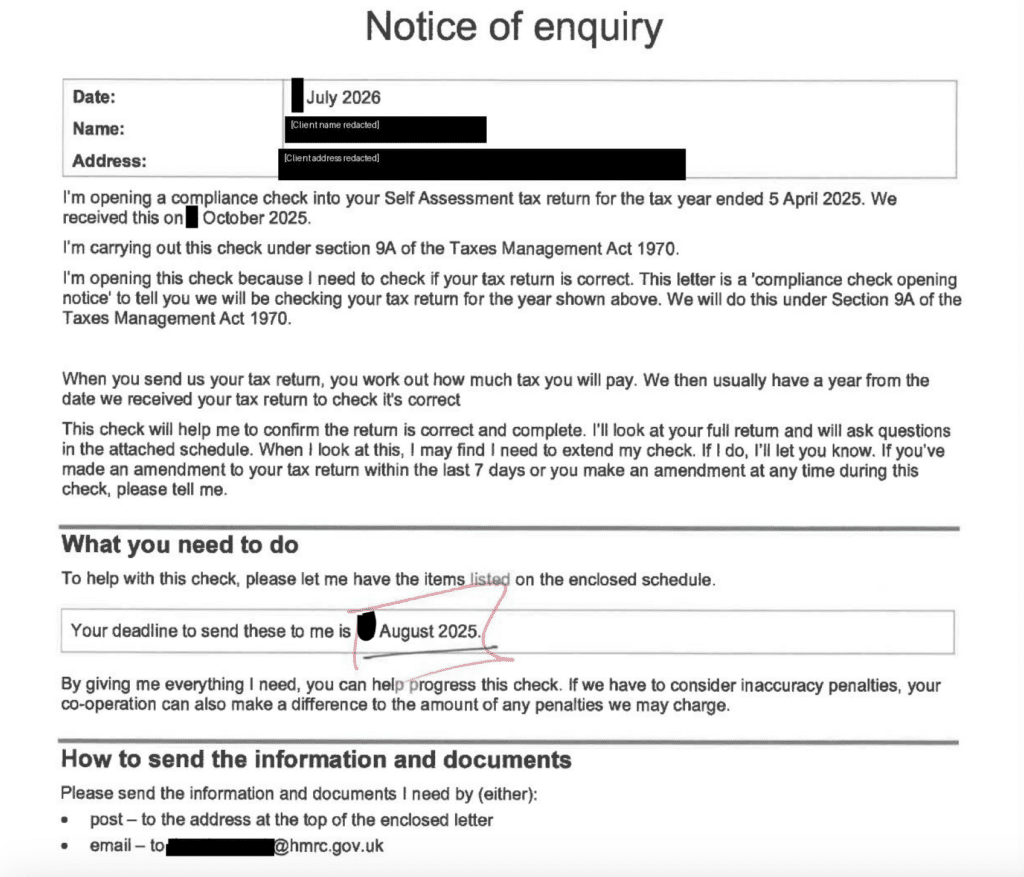
What HMRC asked for
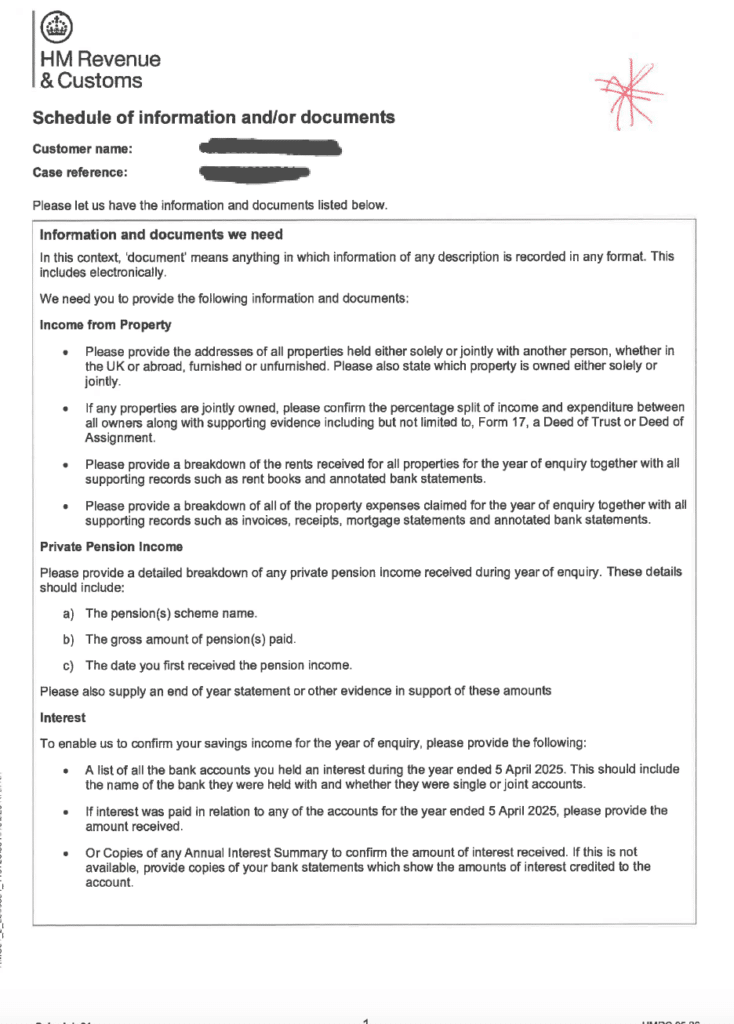
The Notice of Enquiry requested a detailed breakdown across three areas:
- Property income — full property addresses, ownership split (sole or joint, with supporting evidence such as Form 17 or a Deed of Trust if jointly owned), a breakdown of all rent received with supporting bank statements, and a breakdown of every expense claimed with invoices, receipts and mortgage statements.
- Private pension income — scheme name, gross amount received, date first received, and an end-of-year statement.
- Interest — a list of every bank account held during the year, whether sole or joint, and the interest received on each, backed by annual interest summaries or bank statements.
She was given roughly four weeks to gather and provide all of this.
Why this matters
There was nothing in this client’s return to suggest anything was wrong. Her income was modest, her affairs were simple, and she had a tax adviser managing her filings correctly. None of that prevented HMRC from opening a full compliance check requiring a substantial amount of paperwork to be located, checked and submitted within a tight deadline.
This is the reality of Self Assessment: you don’t have to have done anything wrong to be selected for a compliance check. HMRC opens checks for a range of reasons, and it doesn’t tell taxpayers which trigger applied to them. A modest landlady with a state pension is just as capable of receiving one of these letters as a business with complex accounts.
What it means for clients
Even where a check ultimately confirms everything was correct, responding properly takes real time and professional input: interpreting the notice, gathering the right evidence in the right format, and corresponding with HMRC on the client’s behalf. That work carries a cost — one a client may not be expecting to face out of nowhere, over a return they filed correctly.
If you can get insurance, get it
If your accountant or fiancial advisor offers Tax Investigation Insurance, don’t hesitate to get it. This is exactly the scenario Tax Investigation Insurance is designed for. It doesn’t stop HMRC opening a check — nothing can — but it means the professional fees involved in responding to one, like this, are covered, rather than landing on you as a surprise bill.
Details in this case study have been anonymised. Some elements may be adapted for illustrative purposes.