
The situation
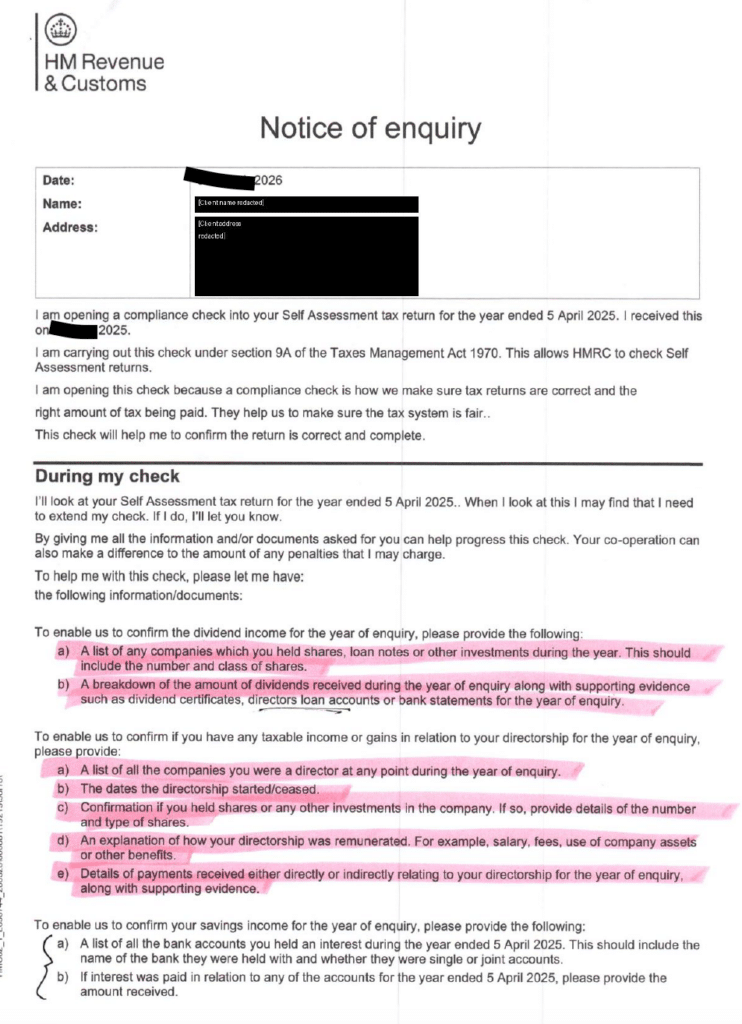
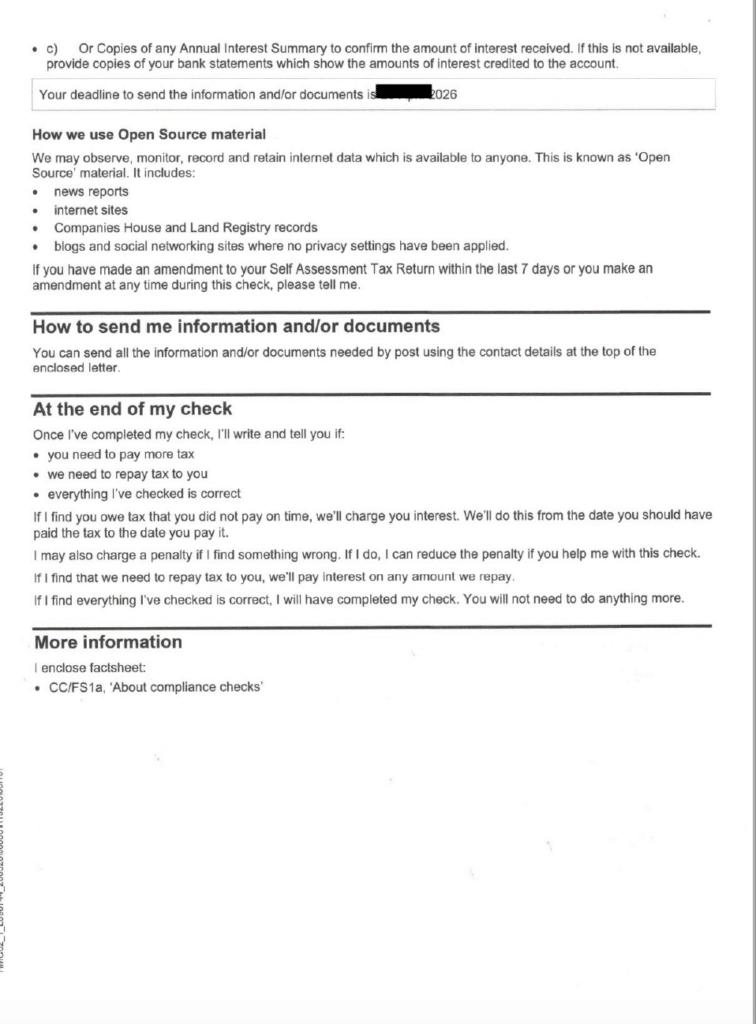
Our client is the sole director of his own limited company. Shortly after switching his accountancy to Jermyn & Co earlier this year, HMRC opened a compliance check into his Self Assessment tax return for the year ended 5 April 2025 — a return that had originally been prepared and filed by his previous accountant, before the switch.
The timing could hardly have been worse: the enquiry letter landed on his desk just after he’d moved to us.
What we found
While preparing the response to HMRC’s enquiry, our team reviewed the figures behind the original return — and identified that the dividend amount needed correcting. A revised Self Assessment return was prepared and submitted to HMRC as part of responding to the check.
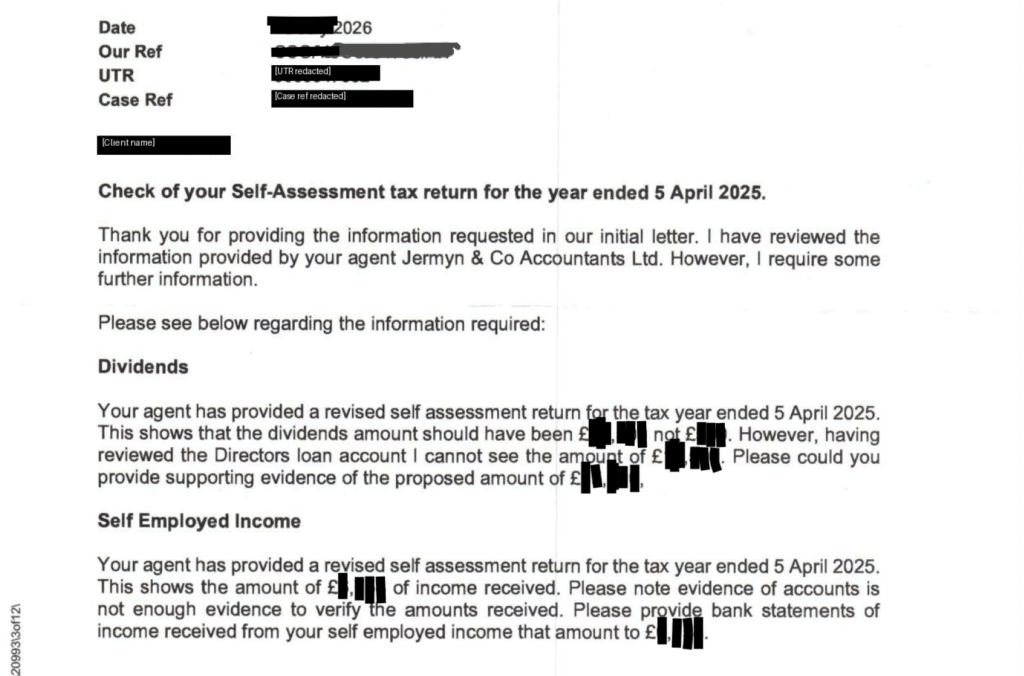
Because the figures changed, HMRC extended the enquiry and came back requesting supporting evidence to match the revised numbers: documentary evidence for the revised dividend figure, since it didn’t reconcile against the director’s loan account, and bank statements to verify a self-employment income figure, since accounts alone weren’t accepted as sufficient evidence.
Where things stand
The check is still open, with HMRC’s deadline for evidence in later 2026. We’re compiling and submitting the requested documentation on the client’s behalf. (This case study will be updated with the outcome once the check is concluded.)
Why this matters
A few things are worth drawing out here:
–You can inherit a problem you didn’t create. This client’s return was filed before we ever worked with him. The enquiry didn’t reflect anything he’d done since switching — but he was the one who had to deal with it.
–Getting things right can still mean more questions, not fewer. Correcting an error as soon as it’s found, even mid-enquiry, is the right thing to do, and disclosing it to HMRC promptly can help limit penalty exposure — but it doesn’t necessarily end HMRC’s scrutiny. Here, the revised figures led HMRC to extend the check and ask for evidence to support them.
–This is exactly the kind of situation that benefits from an adviser experienced in HMRC enquiries. Compliance checks like this need to be handled carefully — knowing what HMRC is entitled to ask for, what evidence will actually satisfy a query, and how to correspond in a way that keeps the check moving toward a close rather than dragging on. This is routine work for us; it isn’t for most business owners.
If you can get insurance, get it.
This client didn’t have Tax Investigation Insurance in place. That means the time we’re spending gathering evidence, corresponding with HMRC, and managing this enquiry through to its conclusion is being billed to him directly, on top of the disruption of an enquiry he didn’t cause.
Compliance checks can run for months. The professional fees involved in responding properly — which is what protects a client’s position — can add up regardless of whether the check ultimately finds anything wrong. Tax Investigation Insurance exists precisely for this: it doesn’t stop HMRC opening a check, and it doesn’t change what’s owed if something genuinely is wrong, but it means those professional fees aren’t an unplanned cost landing on the client at the worst possible time. If your accountant or your financial advisor offers Tax Investigation Insurance, don’t hesitate and get yourself insured.
Details in this case study have been anonymised, and some details may be adjusted for illustrative purposes. This case is ongoing; nothing in this piece should be read as reporting a concluded outcome or as confirmation of any wrongdoing by any party.